Sixty-five lessons across four gear categories — helmets, jackets, gloves, boots — each one reading the certification number stitched inside instead of the brand across the chest. ECE 22.06 versus DOT. EN 13594 levels on a glove cuff. EN 13634 on a boot tongue. Every lesson ends with the same question: what does the label actually promise, and does the price match it. No guessing at the counter — just the certification number, the test behind it, and the price gap it doesn't explain.
By buying you agree to the Terms of Sale and Refund Policy.
0 people went to checkout in the last 24 hours
PDF · 160 pages · 65 illustrated lessons · read on phone, tablet or computer, or print it
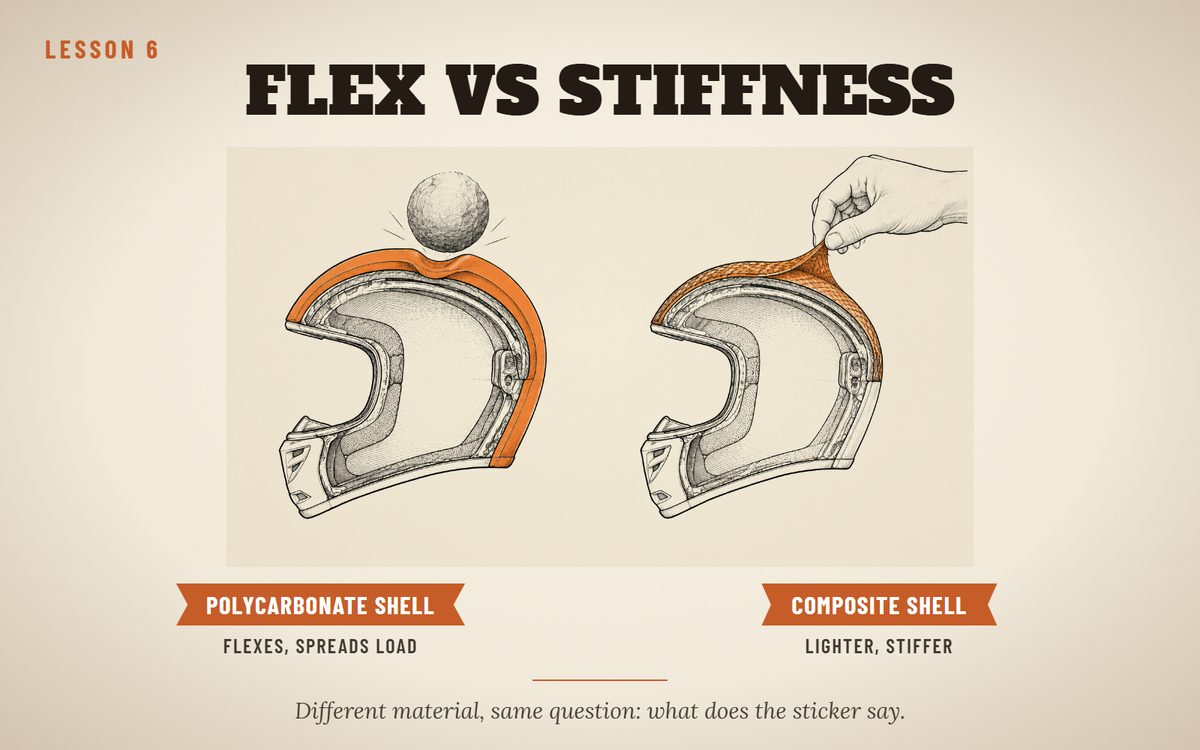
This isn't a ranked list of 'best jackets.' It's for the second before you buy, when the sticker inside the helmet or stitched into the glove cuff is the only thing that actually matters — read out loud, next to the price tag it's supposed to explain.
Flip to the back when something's already wrong. The index lists 189 symptoms — a hot spot, a sliding shoulder pad, a collar that won't stay put — sorted by what you're feeling, not by gear name, pointing straight to the lesson that explains it.
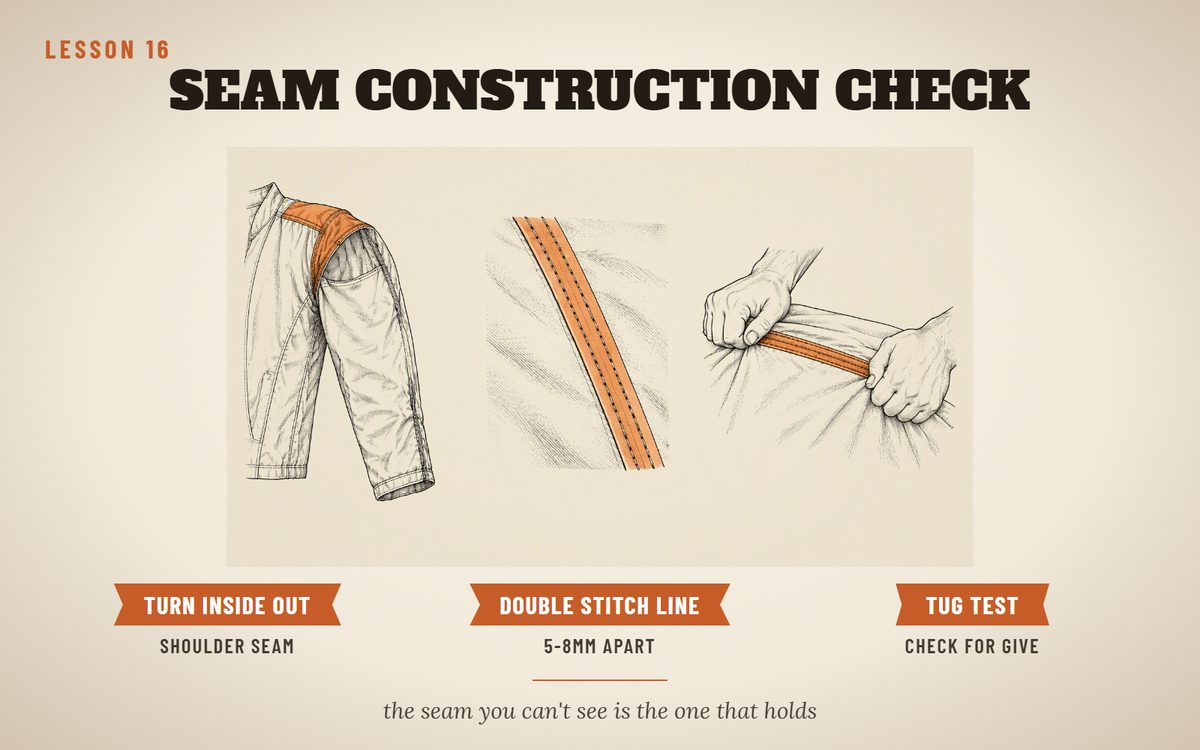
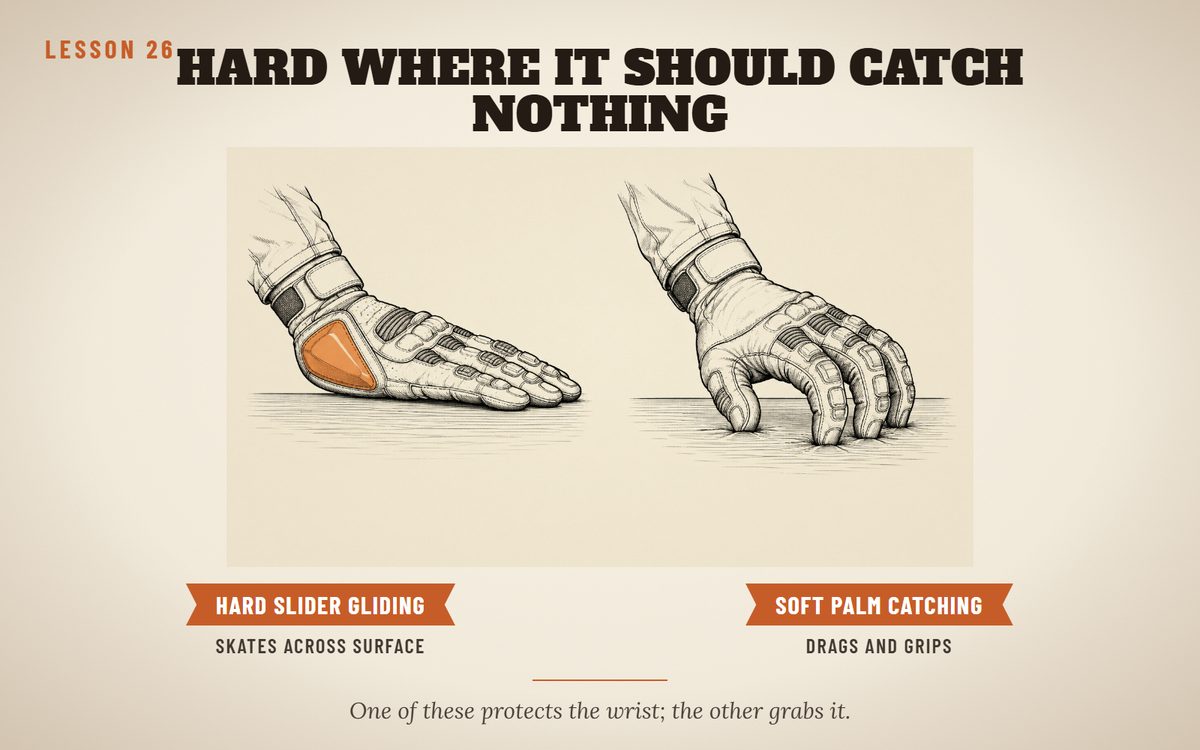
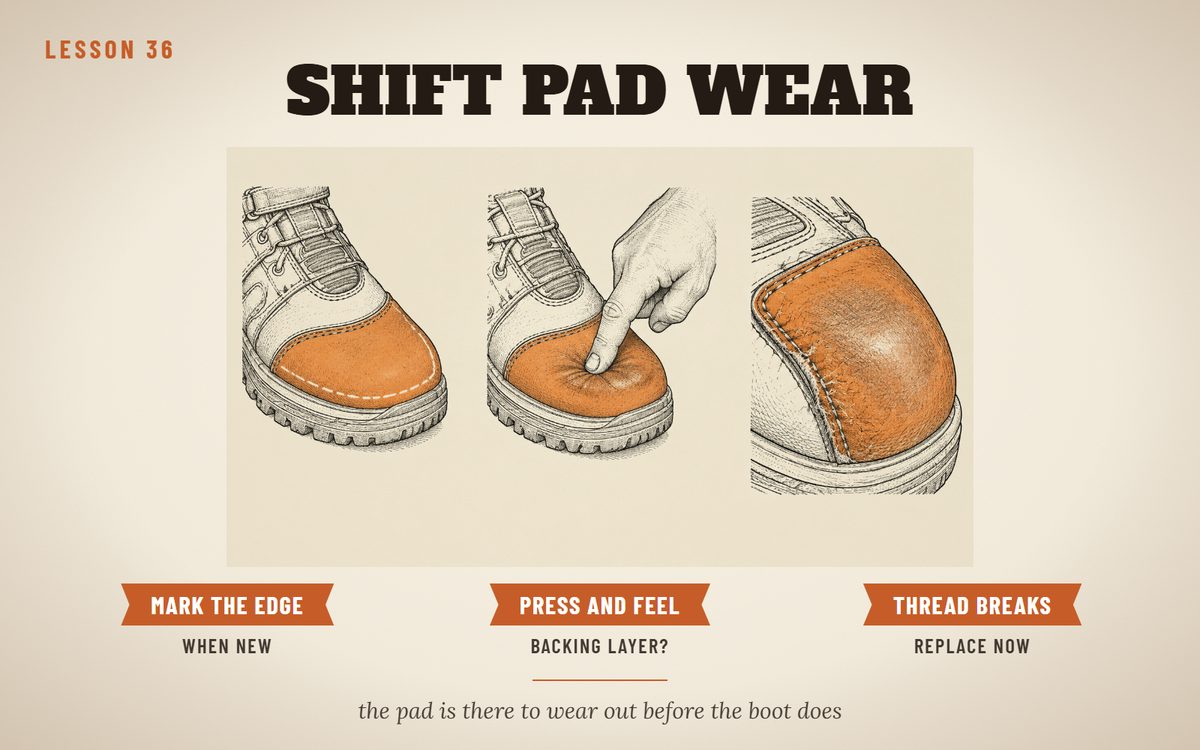
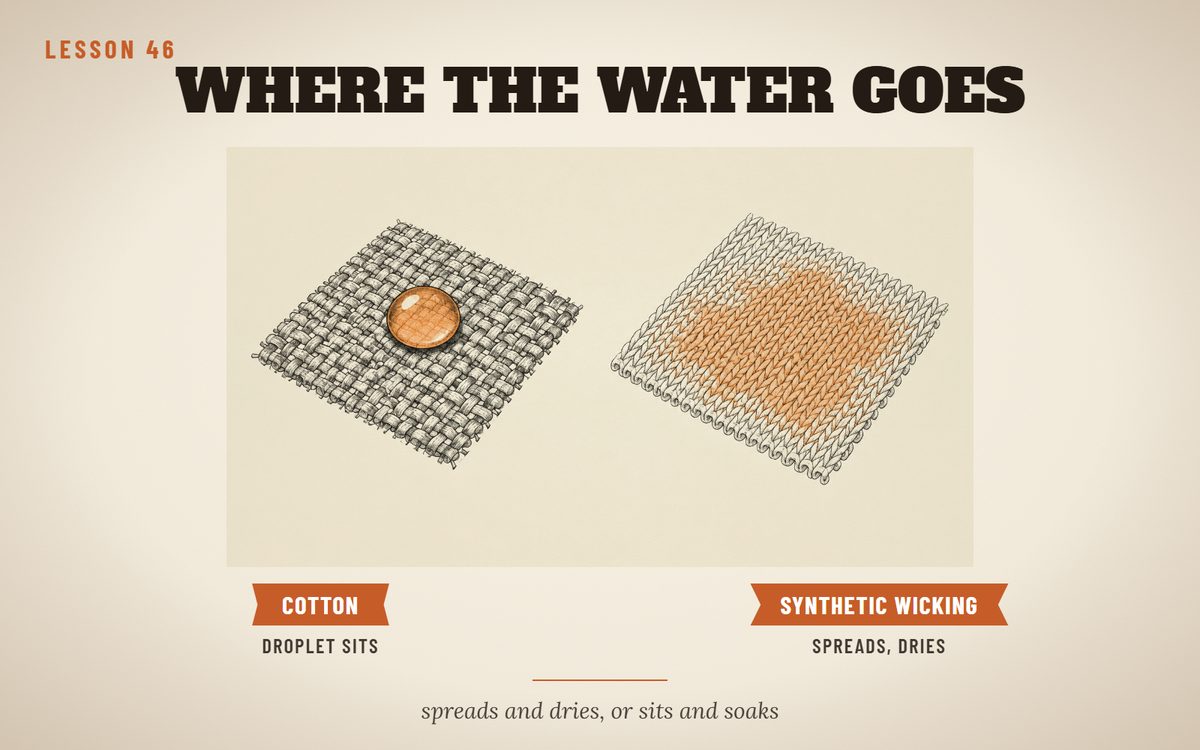
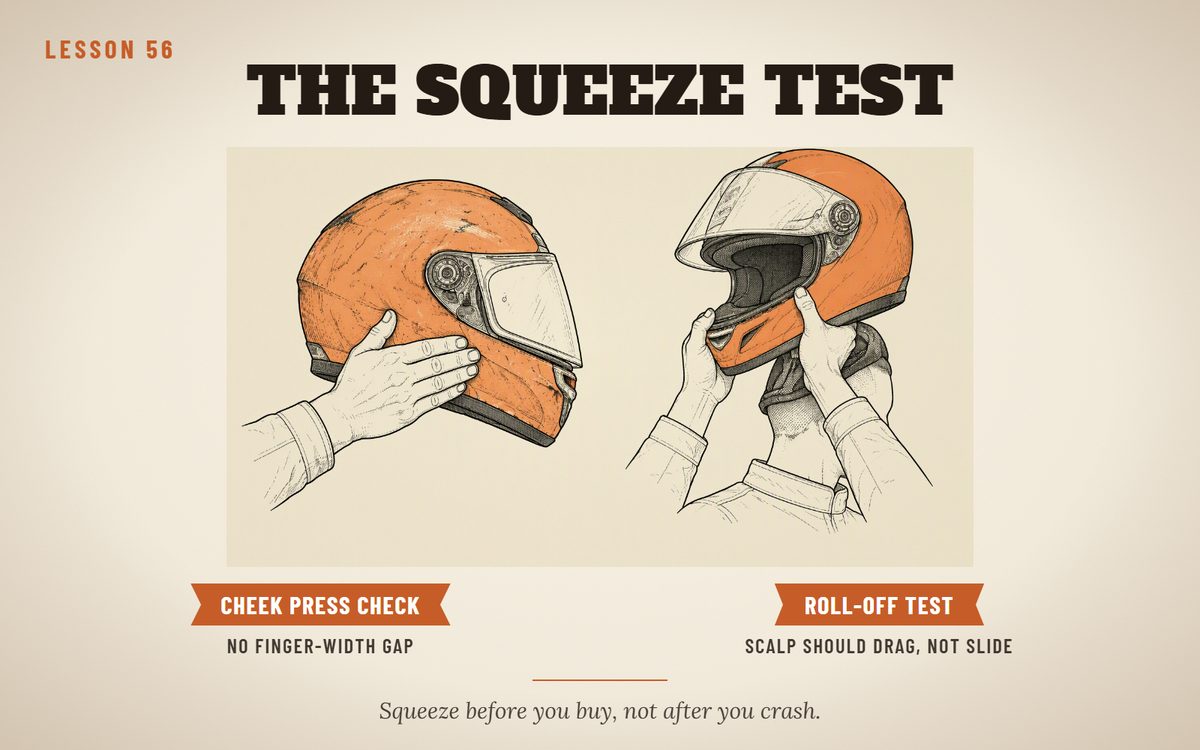
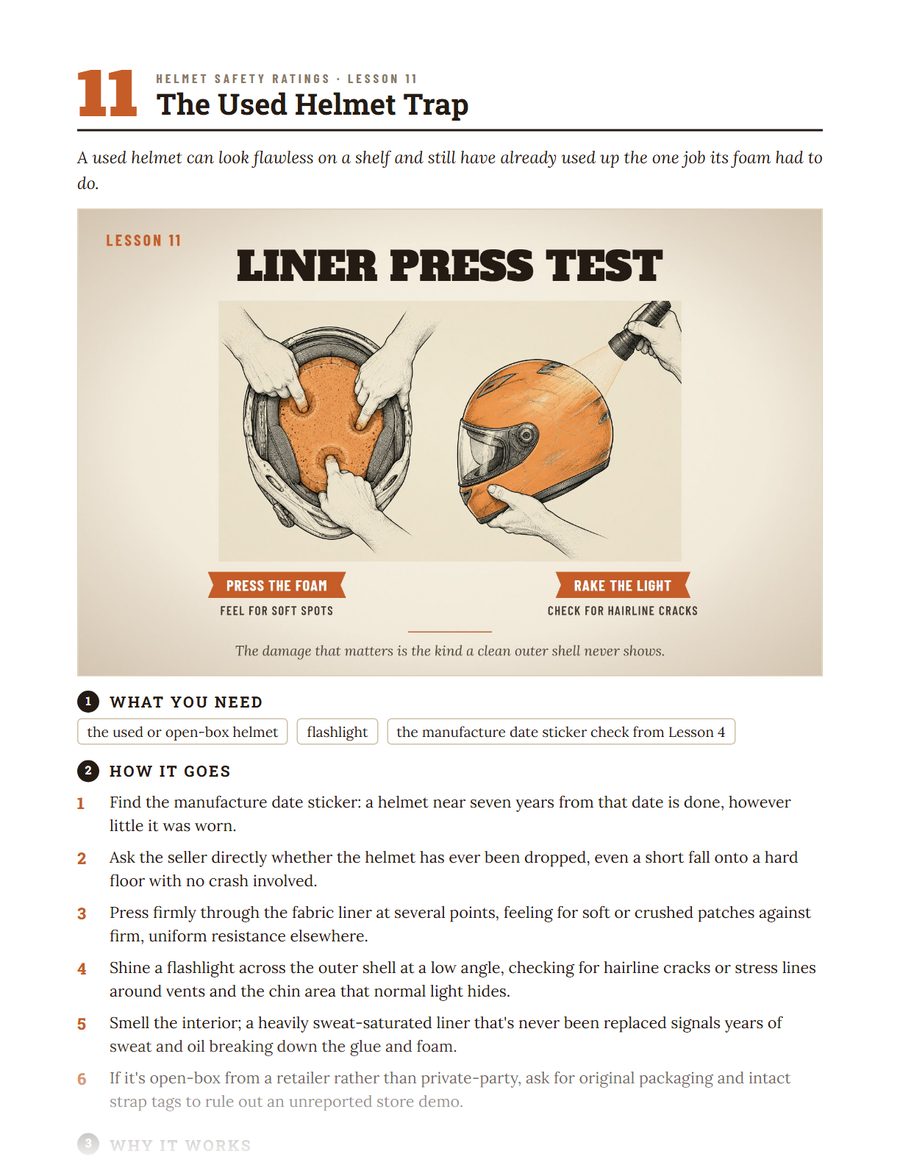
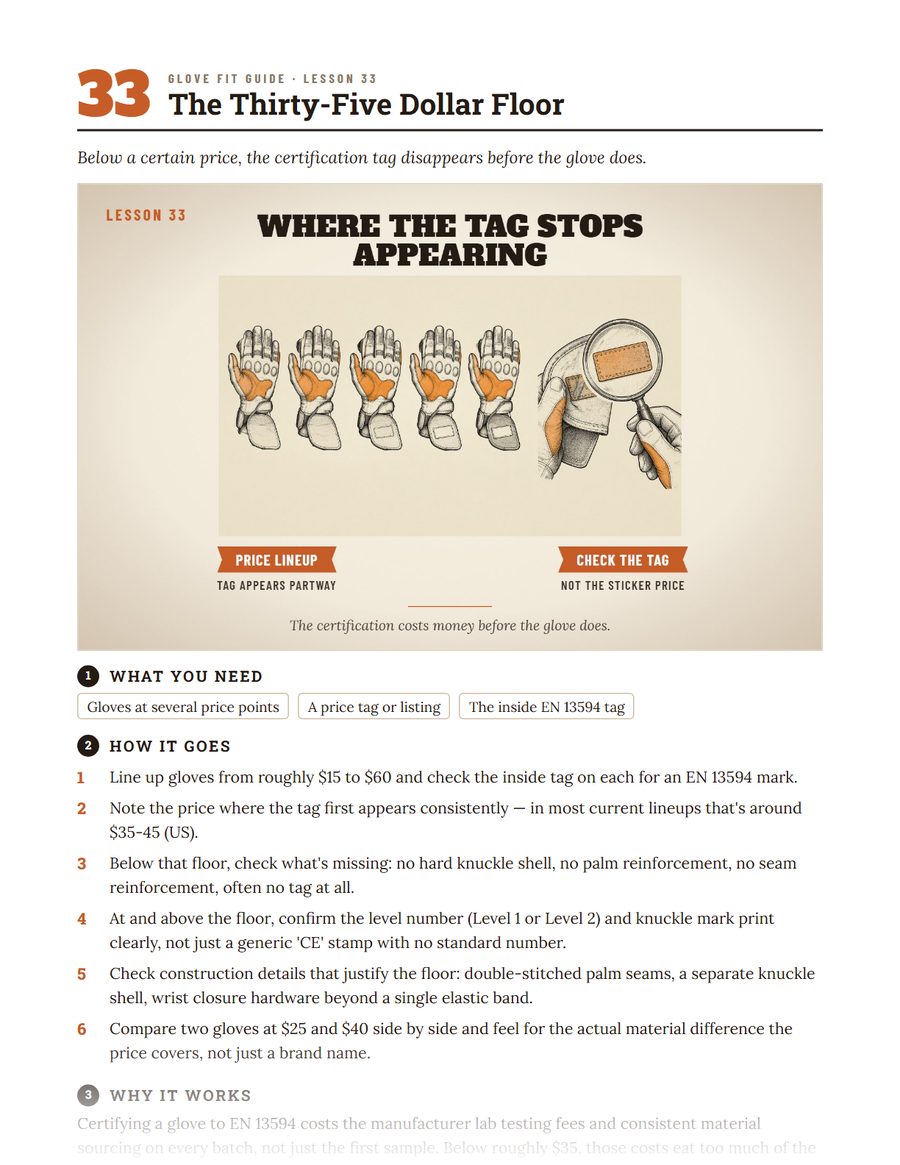
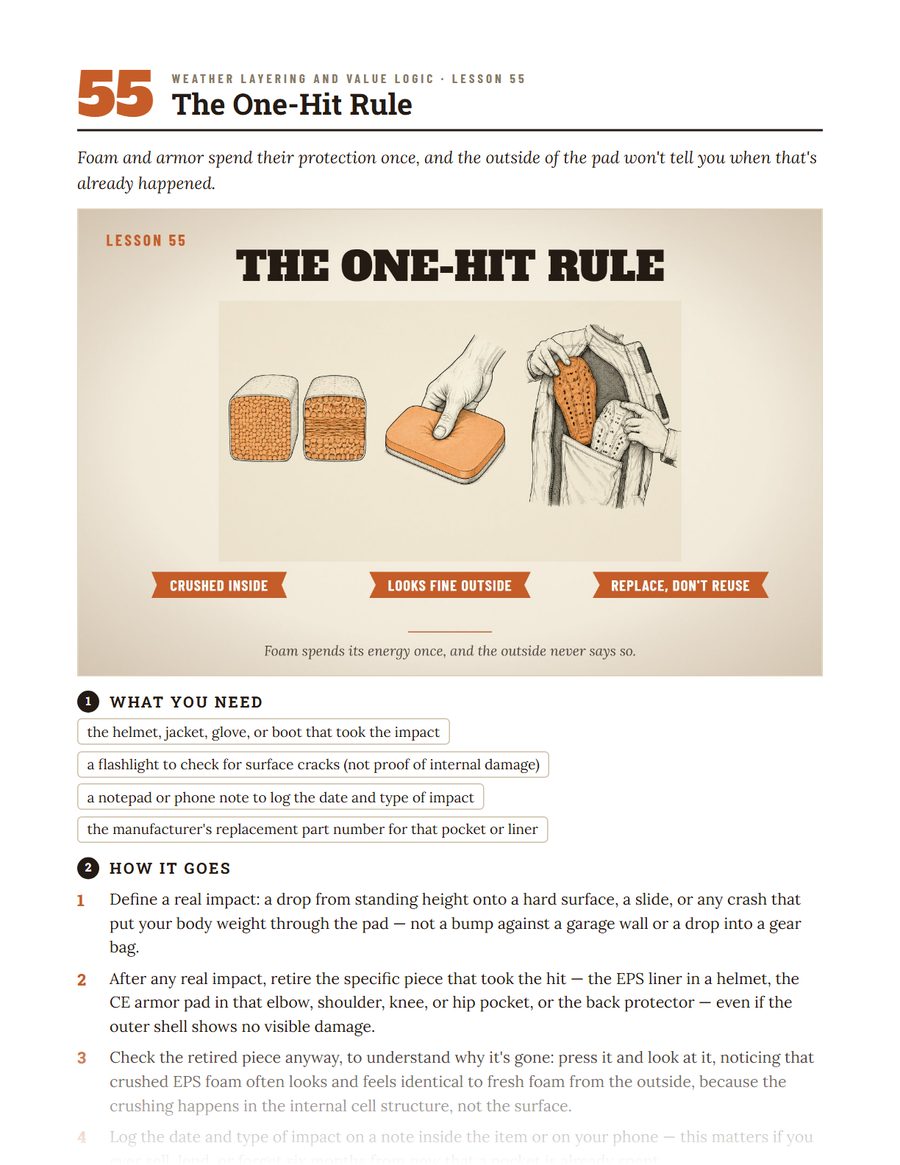
All 65 lessons carry their own drawing — the anvil shape, the glove seam, the boot shaft height — so each check is something you can look at, not just read about.
144 reference numbers — g-force ceilings, abrasion levels, shaft heights in inches and centimeters — pulled out of the lessons and collected where you can scan them fast, instead of hunting back through each section.
Not a vague warning list. 202 specific mistakes, each one named, each tied to the fix that corrects it, sitting inside the exact lesson where it applies.
A typical EN 17092-rated textile jacket runs somewhere around $120-150. A jacket from a flagship line, built on the same pattern, the same armor, sometimes the same factory floor, can run $280-320 for a logo, a color option, and a longer warranty. That's a real gap of roughly $150-180 for the same certified test result.
Figures are typical and vary by brand, season, and region — check the certification number on your own shortlist before assuming the same math holds.
Sixty-five lessons move through six sections — helmet safety ratings, jacket material basics, glove fit, boot types, weather layering and value logic, and a sizing-fix checklist — in the order you'd actually buy and wear the gear.
Sixty-five drawings sit next to the steps — the anvil shape, the seam line, the shaft height — so each check has something to look at, not just read.


"Read the label, not the logo."
The channel's videos keep coming back to one habit: find the certification number before talking about price. Viewers kept asking for the same comparisons on gear covered months apart — a helmet video here, a glove video there — with no single place holding the certification numbers side by side.
Comments kept repeating the same handful of questions: is this jacket actually EN-rated or is that just a store sticker, does a taller boot shaft really mean more protection, is the forty-dollar glove missing the knuckle armor the eighty-dollar one has. Those are the same four or five checks, asked about a different piece of gear each time.
So every certification standard, every abrasion class, every drop-test number got pulled out and sorted into one ordered system instead of five scattered reviews. The common mistakes got counted as they turned up, named individually, and given a fix instead of a general warning. The result is this book: the checks you'd run at the counter, in order, with the number behind each one and the limit of what that number actually proves.
— The Moto Guide
The Moto Guide is a faceless channel built around one habit: find the certification number before forming an opinion about the gear. No host, no face on camera — just the standard, the test it implies, and the price sitting next to it.
Four gear categories get the same treatment every time: a budget piece and a premium piece from the same category, laid side by side at the same certification level, so the only thing left to compare is what the extra money actually buys.
This book collects that method across helmets, jackets, gloves, and boots — decoded by CE and ECE ratings instead of logos, written with AI help, with every safety claim checked against official guidance and published summaries of the standards.
“Read the label, not the logo.”
Word for word from under the videos on YouTube. These are about the channel's advice — the book is new, and reviews of it will go here once readers send them.
One digital book — 65 lessons across six sections covering helmets, jackets, gloves, boots, weather layering, and sizing fixes — delivered as a PDF.
Stripe checkout processes the payment, then the download page opens immediately with your PDF links live on it.
Yes. It's a PDF built to print cleanly, drawings included.
No. The Moto Guide is a faceless channel, written with AI help. The certification standards, numbers, and test methods are real and checked against official guidance and published summaries of the standards; nothing here is a lived anecdote.
The checks come from published certification standards — ECE, EN, DOT — and standard industry practice, not opinion. They don't replace a professional fitting, especially for helmets and boots, or a dealer's own return policy.
14-day money-back guarantee, no conditions attached.
Card, Apple Pay, or Google Pay through Stripe checkout.
One volume, 65 lessons, the certification number behind every piece of gear you'll buy this season.
By buying you agree to the Terms of Sale and Refund Policy.
0 people went to checkout in the last 24 hours